
Forgive and. . . Remember?
Why Memory Is Necessary for Forgiveness

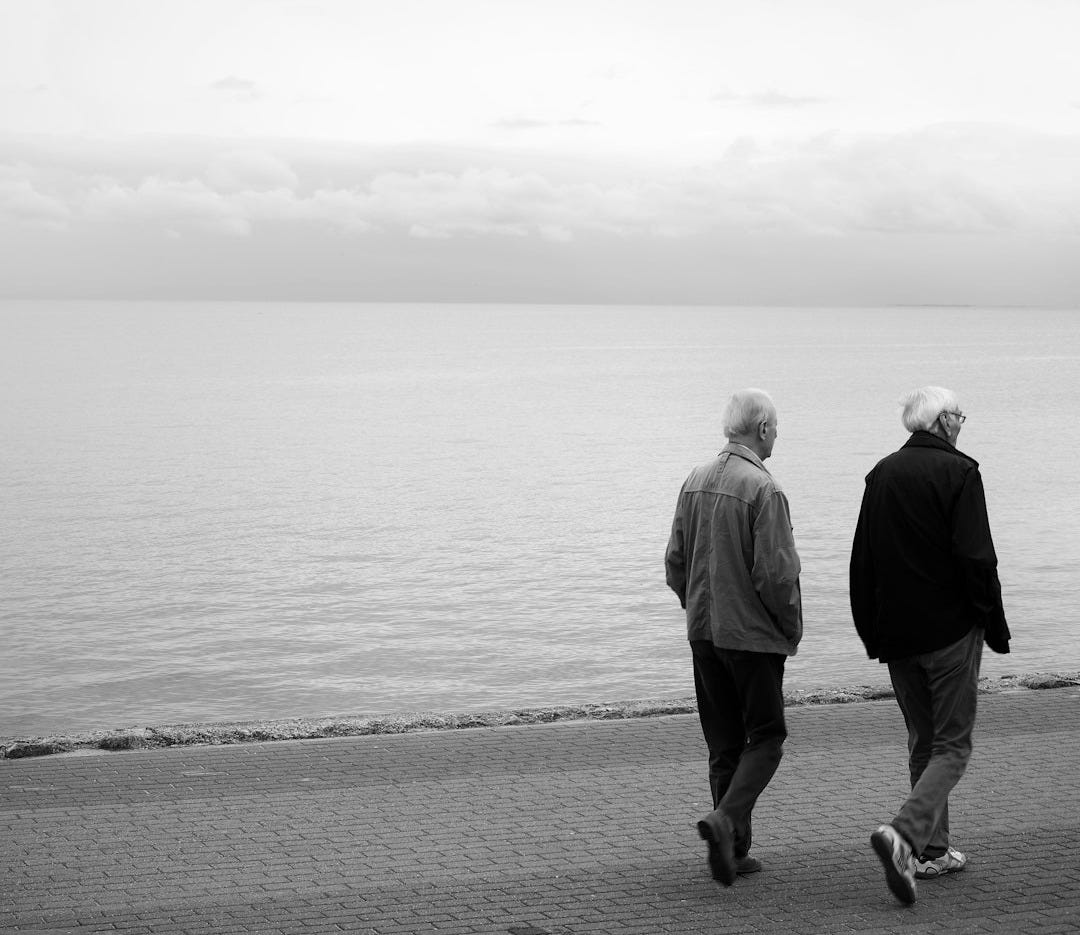
D-Day (June 6, 1944) was 82 years ago yesterday. Operation Overlord was launched as the Allies attacked the German forces entrenched at Normandy.
I can’t think about D-Day without thinking about my dad (Marshall) and Sue’s dad (Sam). Both served in the US Army during WWII. Both served in Europe. Sam was already in theater when the invasion began. Marshall wouldn’t land in Europe until December of 1944.
As I recall it, neither of them talked much about the war. Not with me anyway. Today, as I think about what was accomplished 82 years ago, I wish I knew more about their experiences. What they thought when they heard about the operation in France. Were they afraid? Were they encouraged by it? Stuff like that.
Of course, there is another possibility. Perhaps they did tell me, and I just don’t remember it. That wouldn’t seem like me. I don’t have the greatest memory, but I’d think I’d remember those conversations. But maybe not.
Because such is the case with all memory.
It’s spotty.
Oh, we remember the big things. Events that are highly emotionally charged, especially those from adolescence. Instances where we were hurt–like really hurt–emotionally; we tend to remember those. Or maybe we remember times where we were the one doing the injuring. Maybe we meant it. Or maybe, without any malice, we just said the wrong thing.
I’ve done that a lot. (Those that know me are nodding their heads right now. I can feel it.) I used to wish I could skip directly to second impressions, so bad were my firsts.
I wish I could forget them.
But not really.
I want to remember my offensive acts or words. Maybe put better–I need to remember them. Remembering that I’ve said or done things that harm another acts as guardrails for me. The memory of the offense I’ve caused helps me be the kind of person I want to be. In that sense, the memory of my bad behavior is useful, buffeting me appropriately.
But the standard I hold myself to is not the one I want to be held to by others.
I very much want the forgiveness of those whom I’ve offended. And I’d be pleased as punch if they’d forget the whole thing ever happened or that I ever called their sisters ugly. Forgive and forget. That’s what I want from others.
But is it really?
Of course it is for some things. I certainly want my children to forgive and forget the many times when I put my idiocy on display for them to see. And, to be subject to. Fortunately, God has blessed them–and ME–by giving them faulty memories about their dear old dad.
But other times when my behavior was bad and my words were harmful, I want them to remember. I need them to.
Only then is forgiveness an abiding state.
And, I want to live in the state of their forgiveness. I want to bask in the glow of knowing that they know me, have seen me when I was not guided by my better angels, and yet, they choose to forgive me and love me in spite of that.
Only memory makes that possible.
The offense must be remembered for the forgiveness to be real. Some will argue with me about this. They’ll maintain that ultimate state of forgiveness exists when the offense is not even remembered. It will be just as if it had never occurred.
I don’t think this is to idealize forgiveness beyond its capacity. I think it is to miss the point altogether. Forgiveness must remember. If it does not, the renewed relationship cannot exist. Only the old relationship that never encountered, let alone weathered, the storm of relational hardships and breaks. Relationships that are the strongest–be they personal or community-based–recognize and remember that a wrong has been done. Perhaps more than one wrong, actually. Perhaps a whole system of wrongs that exist and pervade for years or longer.
How can we expect those to be forgotten? The short answer; we can’t.
I’m not the first person to say things like this. Miroslav Volf expressed similar ideas in his book The End of Memory. In that book, he helps readers think about how they should remember past wrongs, not whether they would.
Long before Volf, St Paul addresses himself to the same issue. In 1st Corinthians 13:5, the apostle says that love does not take a wrong into account. Put differently, the person that loves does not enter a wrong done to him into the debit column of the emotional ledger he keeps in his heart. What St Paul does not say, however, is that no wrong has been done. That the one must treat the wrong as non-existent.
Love is expressed through seeing offenses clearly and holding harmless the one who did it.
This is clearly easier with respect to some acts and harder with others.
Still others seem downright impossible.
This importance of the impossibility of forgiveness is the territory Jacques Derrida explores in his essay “On Forgiveness.” (Thank you, Lester, for pointing me to this.) For Derrida, forgiveness is only forgiveness when it is not only hard, but impossible. This goes beyond the interpersonal and includes the ways states and peoples behave even at international and cultural levels.
One reason? Our memories. We remember what was done. We can do no other. In fact, I would go so far as to say that without memory, there can be no real forgiveness. It can’t be given, nor can it be received.
There are, of course, situations in which forgiveness–if understood as obviating punishment–is not on the table. It can’t be. Justice won’t allow it. Crimes deserve punishments, and it is the purview of the state to administer justice for the sake of the communities it serves. While important, this is not our issue today.
Maybe it seems to the reader that this essay has wandered slightly (or seriously!) off course. I mean I started with D-Day and have ended up talking about memory and forgiveness. “How did that happen?” you ask.
It’s not an unreasonable question.
For me, remembering an event–in this case D-Day–makes me think about the importance of remembering in the story of our nation and in our own personal stories. What we remember matters. We don’t, indeed we can’t, remember everything. But we must remember. It is human and it is good. But we must make sure to remember both the good and the bad. Last week, I wrote about the massacre committed against African Americans in Tulsa in 1921. This week, D-Day. The United States is not one or the other. We are both. Our legacy is a mixed one. And, we must remember both.
As is the nation, so are we individuals. We are complicated actors, who do both good things and bad. If we are to be forgiven the bad, we must first forgive. (Something about being forgiving our trespassers as we forgive trespasses against us comes to mind here.) And, that requires that we remember not just the offense done against us, but the offense we have done too.
#D-Day #WWII #memory #forgiveness #AsburySeminary
Lots of good thoughts here.
Maybe you could go further and discuss how memory is very malleable, and how events can be subject to multiple interpretations. This is true on the level of two individuals relating to one another, all the way up to nations interacting with one another. The pictures we carry in our heads about past events--whether those pictures bring us joy or pain--do not necessarily correspond to some imagined objective reality.